Home › Scuba Diving Destinations › Asia › Thailand › Phuket › Anemone Reef
Scuba Diving at Anemone Reef "Hin Jom"
Anemone Reef dive site is approximately 25 kilometres east of Chalong Bay in Phuket, near Shark Point dive spot and the King Cruiser Wreck.
It's an underwater limestone pinnacle that starts around 5 metres below sea level and goes all the way down to 25 metres with a sloped channel in the south.
When is the Best Season to Dive at Phuket?
There are many reasons why the island of Phuket is one of Southeast Asia's premier destinations for snorkeling and scuba diving:
- The water in the Andaman Sea is clear and warm.
- There are countless high quality dive resorts in Phuket.
- The vibrant and diverse marine life is breathtaking.
Plus, this popular holiday destination has easy access to shallow reefs (ideal for beginners) and world-class dive spots for divers with a scuba certification.
For example, Kata Reef (Phuket's "concrete cube nursery") has some artificial structures that have created superb habitats for resident sea life.
The corals have started growing on these man-made reefs and extended the highlights for divers beyond Kata Bay, Koh Pu, and Karon Rocks.
But wait - there's more:
The nearby islands of Koh Racha Yai and Racha Noi are the most popular locations. This area is ideal for local dive schools to conduct scuba training dives and snorkeling tours around Phuket coral islands.
Some of the favoured locations include the Similan and Surin Islands, renowned for granite boulders, large manta rays, and unclouded visibility.
Join one of the daily boat trips to reach the famous Phi Phi island dive sites, surrounded by colourful coral gardens and steep limestone cliffs.
Key takeaways...
The Phuket dive sites get around three hundred days of sunshine per year and the water temperature rarely drops below 29° Celsius (84° Fahrenheit).
At certain times of the year, the Andaman Sea can produce thirty (30) metres of underwater visibility. So, the best months for divers to enjoy clear water dives are January, February, and March.
It is fair to say diving in Phuket is an annual activity. But, divers need to be mindful that the southwest monsoons usually arrive towards the end of May and continue through to the end of October.
Pro Tip: Our sea wildlife section contains extra details about whale sharks and oceanic manta rays that sometimes make an appearance around the islands during the plankton-rich months between June and October.
Marine Life at Anemone Reef
A combination of stunning scenery, pristine white sand beaches, and cobalt blue water has transformed Koh Phuket into one of the top landing places for Thailand diving destinations.
The remarkable combination of massive rock formations and various types of soft corals create a superb backdrop of underwater topography.
Phuket dive sites are amazing places to see big fishes (e.g. pelagics). Plus, divers should expect to catch sightings of macro marine life as well, including:
- Anemonefish (e.g., Red Saddleback Anemonefish)
- Angelfish (Pomacanthidae)
 Boxfish (Ostraciidae)
- Butterfly fish (Chaetodontidae)
- Common octopus (Octopus vulgaris)
- Damselfishes (including Azure Demoiselles)
- Fusiliers fishes (Caesionidae)
- Hermit crabs (Paguroidea)
- Marine reptiles (e.g. green turtle, hawksbill turtle)
- Nudibranchs (e.g. dotted nudibranch)
- Pipefishes (family Syngnathinae)
- Sea anemones (especially bubble tip anemones)
- Seahorses (Hippocampus) (e.g., tigertail seahorse)
Some of the southern islands have become key breeding grounds for large marine reptiles (e.g. turtles). In fact, there are regular events to reintroduce juvenile turtles back into the vibrant ecosystems and help stimulate the growth of colourful coral reefs.
Tips for Diving on Anemone Reef
A boat journey from Chalong Pier takes about two (2) hours to reach the submerged pinnacle. There should be a descent line on to the top of the pinnacle (about 5 metres).
Nonetheless, entries and exits on and off the boat can be a little tricky when there is a strong current or choppy waves.
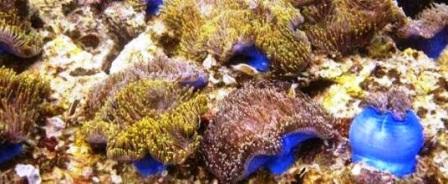
The formation slopes down to a sandy bottom on the west side, and the east side has a wall going down to sandy bottom. Even so, the main attraction is the colourful carpet anemones - great for underwater photography.
Most divers descend at the east side at about seven (7) metres to look inside a small cave about one (1) metre high. Take a peep inside and you may see Janss' pipefish (Doryrhamphus janssi), camel shrimp (Rhynchocinetes durbanensis), and banded coral shrimp (Stenopus hispidus).
Moving on...
As you descend further down the east side you should see three large sea fans at around eleven (11) metres. Look inside and you may catch sightings of a group of tigertail seahorses (yellow and black).
Depending on the currents, you usually have a choice of swimming north or south. If you head south, there should be lots of nudibranch sea slugs and a few bearded scorpionfish.
There's nearly always a few greyface moray eels jabbering inside the cracks and crevices of the corals - often 6 or 7 stationed together.
The sloping channel is a favourite resting spot for leopard sharks (Triakis semifasciata) as they relax peacefully on the sand.
Don't forget to look up because there is so much more fish life to see, particularly different types of squid species, trumpetfish, cornetfish, and an occasional dogtooth tuna (Gymnosarda unicolor) passing by.
But wait - there's more:
To the left side of the channel there are a few coral bommies which often have Panulirus versicolor (spiny lobster) hiding inside.
When you go through the channel, and start heading north on the west side of the pinnacle, the sloping wall has even more sea life, including spotted boxfish (Ostracion meleagris) and yellow boxfish (Ostracion cubicus).
On the east side, stay watchful for the resident sea turtle and a superabundance of pink skunk clownfish, Clark's anemonefish, and false percula clownfish. Remember to look in the blue for passing whale sharks and manta rays.
Once you've been round the pinnacle, make your way to the ascent line for your three (3) minute safety stop on the line at five (5) metres, especially when the water movement is powerful.